Wei-Ti Chen Looks Beyond Medicine to Transform HIV Care
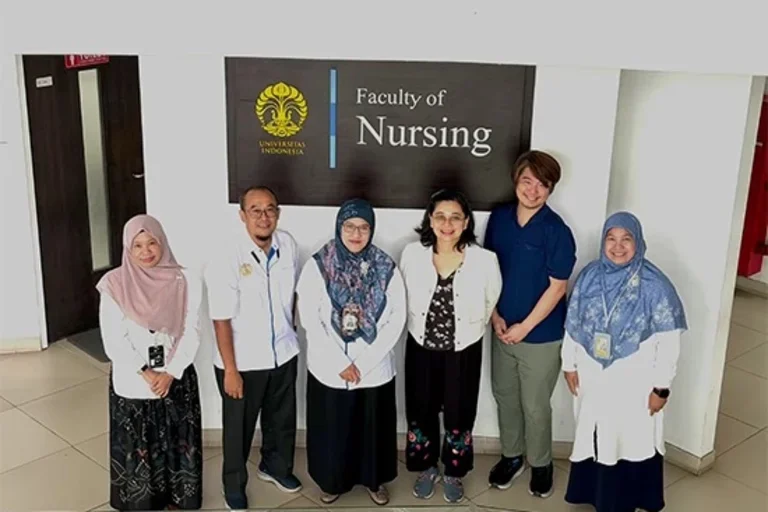
As a postdoc in 2002, Wei-Ti Chen traveled to China to study how HIV care was provided and found that nurses lacked training on how to treat the population and what universal care meant for HIV; now, over 20 years later Wei-Ti is discovering a similar story in Indonesia. When it comes to HIV care, pre- and post-natal care and proper medication are crucial, but as a scholar of the School of Nursing Wei-Ti looks beyond just treatment. She has built a career looking at stigma and cultural expectations in populations traditionally overlooked to understand how these factors shape the care of HIV positive individuals.
Her work begins in people’s communities. Wei-Ti has traveled to various countries in Asia to learn from “local researchers and then work with them and the system they know better than us to deliver interventions.” Wei-Ti ensures that her team’s interventions that help mitigate stigma in HIV care are not only taught to front line healthcare workers but also for graduate students and faculty at research institutions so that “they can continue their own research for the project...and deliver what ends up being the next wave of the intervention.”
Understanding stigma and cultural expectations will continue to take Wei-Ti to different countries and communities, as the challenges facing people living with HIV evolve with their social environments. She is currently examining religion: “Thailand is about 90% of the populations are Buddhism, and Indonesia about 95% are Muslims, which means that people who are living with HIV might not Buddhists, might not Muslims...are still impacted heavily because they grew up with the culture.” And closer to home, she is understanding how housing instability in Los Angeles creates another set of barriers for people living with HIV, particularly as HIV care facilities close and figuring out transportation and staying safe takes precedence over managing their health. Though each community and circumstance are different, Wei-Ti's approach remains rooted in the same principle: understanding people's lived experiences and figuring out interventions that can give them access to the care they need.
Related Articles